
The Intimacy of Spiritual Trauma
The world is a wonderful and hard place.
You do the work every day of caring for yourself and others in many ways – nourishment, gathering, quiet, labor, errands, sorting data, making choices. Being human takes energy, effort, and tenacity.
Spiritual practices and communities are meant to bolster our sense of meaning, to help us feel less alone and less burdened by the daily work or the hard stuff of life. Spiritual communities are meant to give us energy. Through sacraments, words of hope, and a place and people to lean on, we grow no matter the terrain of our life. Life becomes more navigable with these things. The spiritual practices and the support of a spiritual community tie us to daily, weekly, yearly reminders that God has not forgotten us, God is present with us in all of life.
Spirituality is intimate, and so unfortunately is spiritual trauma.
Spiritual trauma is disconnection
Spiritual trauma is when something disrupts our sense of connection to God. It may be religious trauma, when a religious system or organized teaching robs our agency, our sense of self, or brings us fear rather than connection with God. But spiritual trauma is broader also. It doesn't need to be a perpetuation of abuse directly from a spiritual system itself, but might be abuse by someone we trusted which then impacts our view and attachment to God.
Spiritual trauma can be a slow distrust creeping in but feeling as though we have nowhere to go with our questions and so we feel isolated and far from support. Our sense of spiritual safety is especially eroded when the center of our worship life or spiritual community harms or disappoints us.
There may be accountability needed which never comes. There may be harm wrought left unnoticed. There may be silence when there should have been justice.
Spiritual trauma often comes from disappointment in the practices or the people that once represented God to us, explicitly or implicitly. We are left whispering or crying out:
"Where have you gone, God?"
"I thought you were on my side, God."
"You could have protected me God."
"Why does evil win, God."
All of these are natural questions, often cited by humans across the centuries of sacred and secular literature. It does not make us feel less frustrated or alone when we ask them. When they crop up, we need a season of healing. God invites us to a season of healing. We often try to find a way around this healing, reasonably, because getting closer to pain and fear never sounds like a good idea. We also sometimes have no language for what we have experienced or a place to say it.
The way is through
The path is forward, but we need a little bit of a guide.
Yet, here is the impasse to our healing: God as Guide was a risk. People or things that represent God were also a risk. But we are spiritual creatures and we cannot unspiritualize ourselves into something safer. The work and wonder of spiritual trauma is finding a new path with people, words, and practices that honor the risk.
I want to invite you to honor that risk within yourself on the pathway out of spiritual trauma below.
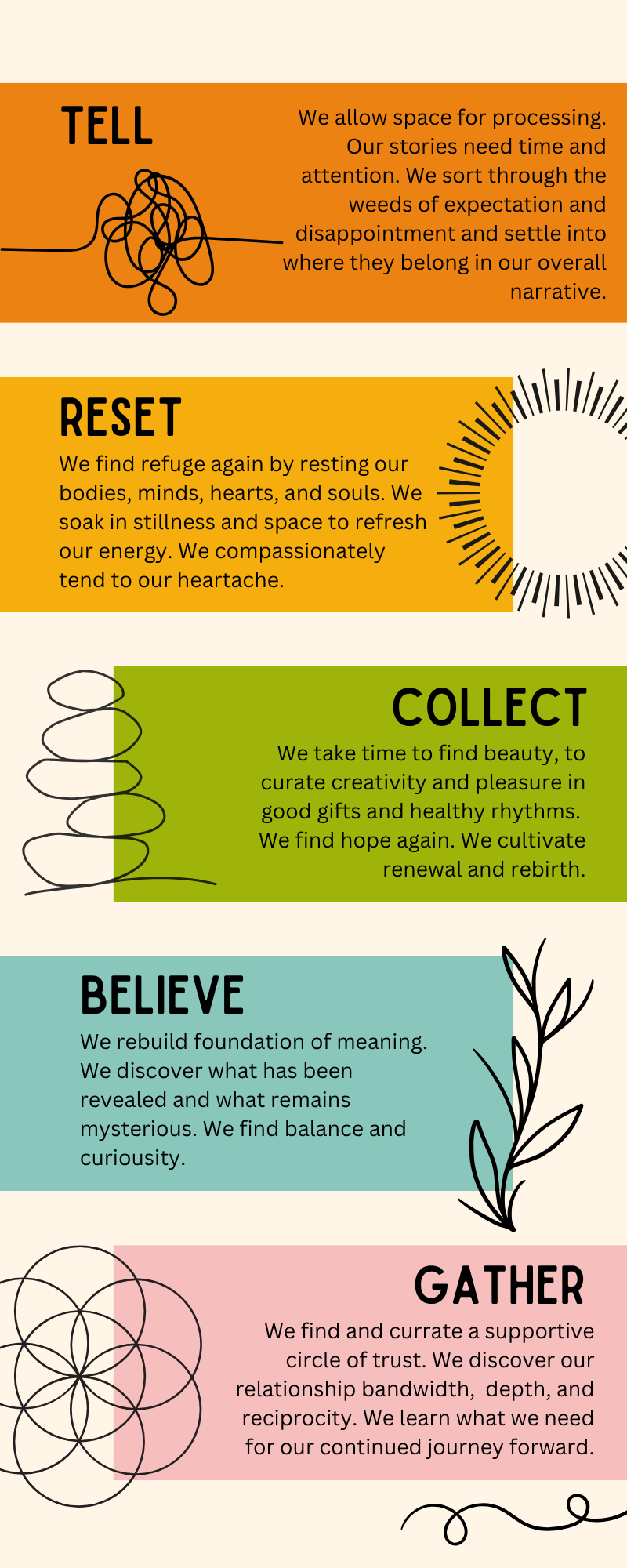
In some situations, hiking is safer with a buddy system so we don't feel lost or there is someone to notice if we need a hand up the hill. You might walk through the pathway with a companion. And in some situations, having someone who has walked the trail before and has a bit of expertise about the trail is a good idea.
There is hope on this path, keeping us connected to God while being honest about hurt, harm, and being human. Start with step one and give your soul space to heal.
Join us for a gentle webinar for The Pathway Out of Spiritual Trauma, learn the 5 trailmakers, and know you are not alone on the journey. If you cannot join us, know you are not alone all the same. Connection at times feels far off. Healing is nearby.
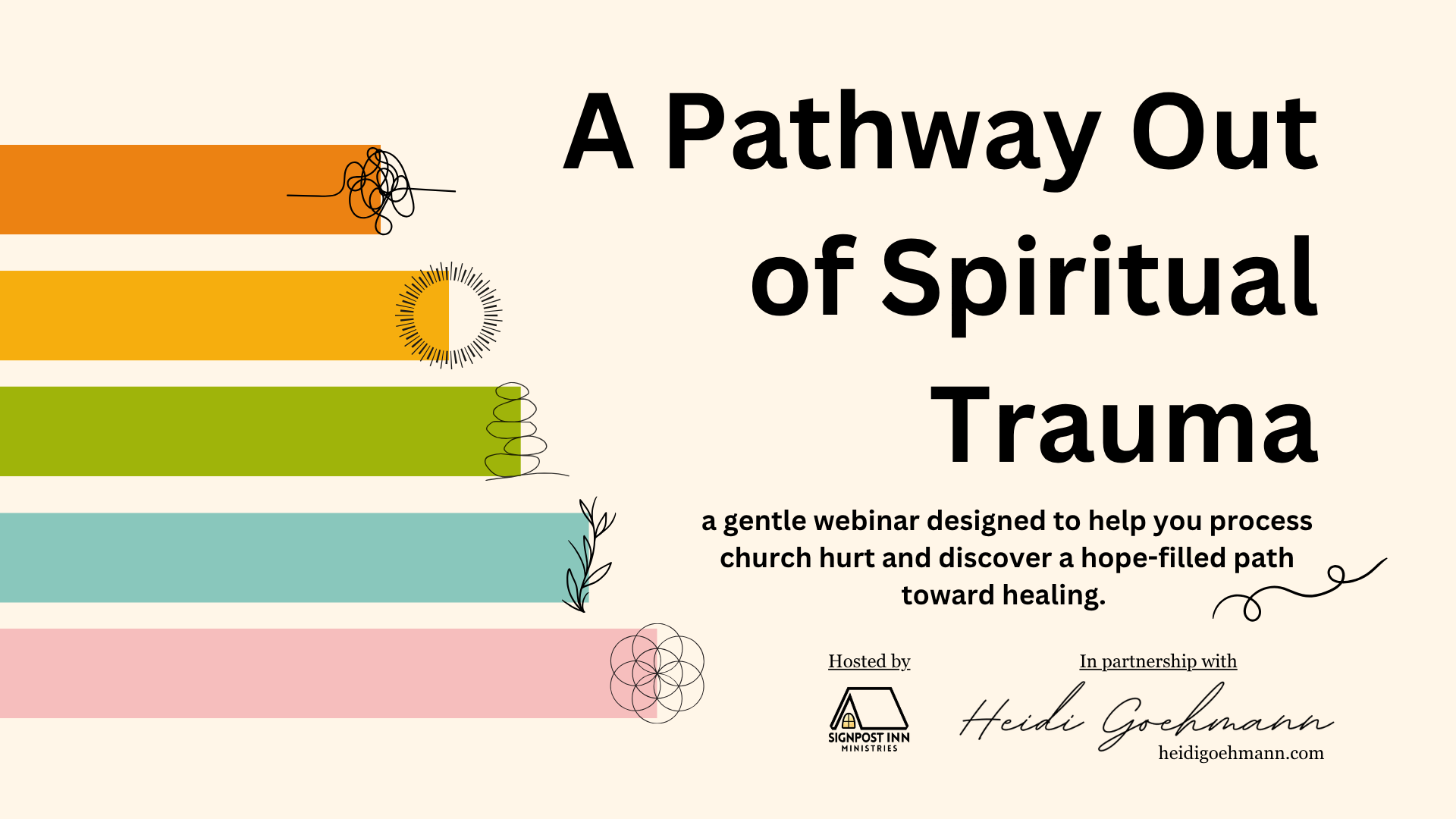
Register with our friends at Signpost Inn Ministries